
Beim Lötprozess in der modernen Fertigung werden elektronische Bauteile mithilfe kontrollierter Wärme und einer Lötlegierung miteinander verbunden. Besonders beim Löten in der Elektronikfertigung müssen diese Verbindungen elektrische Signale übertragen und die Bauteile fest an ihrem Platz halten.
Aus diesem Grund erfordern Branchen wie die Automobilelektronik, die Medizintechnik und die Herstellung hochdichter Schaltungen während der Produktion gleichbleibende und streng kontrollierte Lötstellen. Eine schwache Lötverbindung kann zu elektrischen Ausfällen, mechanischen Schäden oder einem vorzeitigen Ausfall des Produkts führen.
Um diese Probleme zu vermeiden, muss der Lötprozess sorgfältig gesteuert werden. Zu den wichtigsten Variablen zählen Temperatur, Lötvolumen, Oberflächenbeschaffenheit und Positioniergenauigkeit. Moderne Lötsysteme und Roboterlötanlagen helfen bei der Steuerung dieser Variablen, indem sie die Wärmezufuhr, die Bewegung und die Lötmittelzufuhr regeln.
Schritt 1: Vorbereitung der Verbindungsfläche im Lötprozess
Der erste Schritt des Lötprozesses ist die Vorbereitung der Verbindungsfläche. Das Substratmaterial, die Beschichtung der Bauteilanschlüsse, die Lötlegierung und die Zusammensetzung des Flussmittels müssen aufeinander abgestimmt sein.
Eine häufige Herausforderung im Lötprozess ist die Oxidation der Oberfläche. Oxide verhindern, dass das geschmolzene Lot die Oberfläche ordnungsgemäß benetzt. Während des Erhitzens entfernt das Flussmittel diese Oxide und ermöglicht so die Verbindung der Lötlegierung mit dem Grundmaterial.
In dieser Phase überprüfen Ingenieure, ob die Lötlegierung, das Flussmittel und die Oberflächenbeschaffenheit während des Erhitzens korrekt zusammenwirken. Die Oberflächenbeschaffenheit, die Wahl der Legierung und die Aktivierungstemperatur des Flussmittels werden bewertet, um eine zuverlässige Verbindungsbildung sicherzustellen.
Schritt 2: Temperaturregelung während des Lötprozesses
Als Nächstes folgt die Temperaturregelung, eine der kritischsten Variablen im Lötprozess. Die Lötstelle muss die Liquidustemperatur der Legierung erreichen, damit das Lot schmelzen und über die Oberfläche fließen kann.
Zu viel Wärme kann benachbarte Bauteile beschädigen und das Wachstum intermetallischer Verbindungen sowie einen als „Lötspitzen“ bekannten Defekt beschleunigen. Zu wenig Wärme verhindert eine ordnungsgemäße Benetzung und schwächt die Verbindung im Lötprozess.
Für eine gleichbleibende Produktion muss das System eine stabile Temperaturregelung gewährleisten. Es muss einen konstanten Sollwert halten und sich gleichzeitig an unterschiedliche Verbindungsgrößen und thermische Belastungen anpassen.
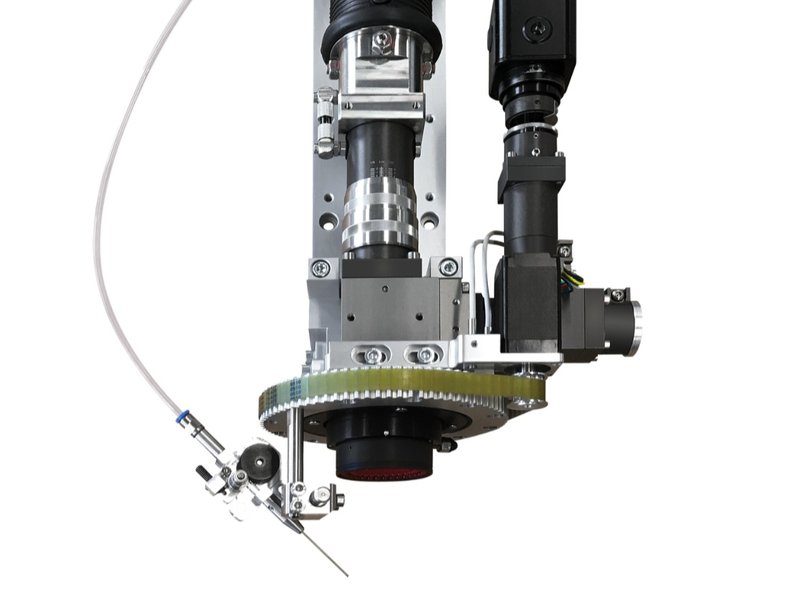
Die Lötköpfe von mta robotics, wie beispielsweise der Roboter-Lötkopf MSH150, nutzen eine Temperaturregelung im geschlossenen Regelkreis mit integrierten Temperatursensoren. Das System passt die Leistung kontinuierlich an, um während des Lötprozesses eine konstante Spitzentemperatur aufrechtzuerhalten.
Schritt 3: Steuerung des Materialauftrags im Lötprozess und Regulierung des Materialvolumens
Neben der Wärme erfordert der Lötprozess eine präzise Steuerung des Materialauftrags. Schwankungen bei der Lötzufuhr beeinflussen die Geometrie der Lötstelle, die elektrische Leitfähigkeit und die mechanische Festigkeit.
Ablageparameter wie Zufuhrgeschwindigkeit, Timing und Drahtdurchmesser müssen auf die Verweilzeit und die Roboterbewegung abgestimmt sein. Roboterbasierte Lötsysteme koordinieren die Lötzufuhr, die Bewegungssteuerung und präzise Lötköpfe, um eine gleichmäßige Lötstellenbildung zu gewährleisten.
mta robotics löst dies durch integrierte Drahtzuführungssysteme, die mit programmierten Bewegungsbahnen und Prozessabläufen synchronisiert sind. Durch die Steuerung, wann und wie das Lot in Abhängigkeit von der Position der Spitze und der Wärmezufuhr zugeführt wird, stellt das System sicher, dass das Material an jeder Lötstelle unter gleichbleibenden thermischen Bedingungen aufgebracht wird. Dieser Grad an Synchronisation verbessert die Kontrolle über das Benetzungsverhalten und die endgültige Geometrie der Lötstelle und reduziert Schwankungen im Lötvolumen über Produktionszyklen hinweg.
Schritt 4: Benetzungsverhalten und Bildung intermetallischer Verbindungen im Lötprozess
Sobald das Lot die Lötstelle erreicht, kommt es entscheidend auf das Benetzungsverhalten an. Eine ordnungsgemäße Benetzung hängt von der Oberflächenenergie, der Temperaturstabilität und der korrekten Aktivierung des Flussmittels ab. Das Lot muss sich gleichmäßig über die Lötstelle verteilen und gleichzeitig an der Grenzfläche eine kontrollierte intermetallische Verbindung bilden.
Ein übermäßiges Wachstum intermetallischer Verbindungen kann zu spröden, ermüdungsanfälligen Lötstellen führen, während eine unzureichende Bildung die Haftfestigkeit und die elektrische Leitfähigkeit beeinträchtigt.
Die robotergestützte Positionierung gewährleistet eine gleichbleibende Kontaktgeometrie, einen konstanten Anfahrwinkel und eine gleichbleibende Verweilzeit. Die automatisierten Lötsysteme von mta robotics bieten eine Positionswiederholgenauigkeit im Mikrometerbereich und gewährleisten so ein stabiles Benetzungsverhalten über Hunderttausende von Zyklen hinweg.
Schritt 5: Abkühlung der Lötstelle und strukturelle Stabilität im Lötprozess
Nach dem Benetzen beginnt die Lötstelle abzukühlen und zu erstarren. In dieser Phase bildet das Lot seine endgültige Mikrostruktur aus, die die mechanische Festigkeit, die Verteilung der Eigenspannungen und die Langzeitzuverlässigkeit beeinflusst.
Das Abkühlverhalten wird in erster Linie durch die Baugruppe selbst bestimmt, einschließlich des Leiterplattendesigns, der Bauteilmasse und der Umgebungsbedingungen. Wenn die Abkühlung zu schnell oder ungleichmäßig erfolgt, können Defekte wie Hohlräume, Mikrorisse oder innere Spannungen entstehen.
Roboterlötanlagen steuern die Abkühlung zwar nicht direkt, spielen jedoch eine wichtige Rolle bei der Gewährleistung gleichbleibender Bedingungen, die zur Erstarrung führen. Durch die Aufrechterhaltung einer wiederholbaren Wärmezufuhr, Verweilzeit und eines konstanten Lötvolumens tragen Robotersysteme dazu bei, dass jede Lötstelle unter stabilen und gleichmäßigen Bedingungen in die Abkühlphase übergeht. Diese Stabilität ist ein wesentlicher Bestandteil moderner Lötsysteme.

Schritt 6: Überwachung und Validierung
Abschließend muss der Prozess gemessen und validiert werden.
Eine Sichtprüfung allein reicht nicht aus, um die Integrität der Lötstellen in Anwendungen mit hohen Zuverlässigkeitsanforderungen zu gewährleisten. Stattdessen setzen Hersteller auf eine strenge Kontrolle von Temperatur, Lötmittelauftrag und Prozessablauf während des Betriebs.
Eine strenge Prozesskontrolle stellt sicher, dass jede Lötstelle innerhalb definierter Parameter hergestellt wird, wodurch Abweichungen reduziert und eine stabile Produktionsleistung gewährleistet werden.
mta robotics unterstützt eine strukturierte Prozessentwicklung parallel zum Einsatz von Robotersystemen. Schlüsselfertige Lötsysteme werden mit validierten Parametern und dokumentierten Leistungskriterien geliefert.
Robotergesteuerte Kontrolle des Lötprozesses
Beim manuellen Löten kommt es zu Schwankungen bei der Wärmeübertragung, der Bewegungsgenauigkeit und des Materialauftrags. Die Technik des Bedieners wird so zu einem limitierenden Faktor sowohl für die Prozessfähigkeit als auch für den Produktionsumfang.
Automatisiertes Löten beseitigt diese Schwankungen. Moderne Lötsysteme nutzen wiederholbare Bewegungssteuerung, synchronisierten Materialauftrag und eine thermische Regelung im geschlossenen Regelkreis, um während der Produktion eine gleichbleibende Lötleistung zu gewährleisten.
Mit diesem Ansatz wird das Löten zu einem kontrollierten Fertigungsvorgang und nicht mehr zu einer von der Fachkompetenz abhängigen Aufgabe.
Die Roboterlötanlagen und Präzisions-Lötköpfe von mta robotics sind für die industrielle Produktion mit hoher Verfügbarkeit ausgelegt, bei der Wiederholbarkeit und Zyklusstabilität erforderlich sind.
Prozessintegrität und Produktionsstabilität beim Löten in der Elektronikfertigung
In der modernen Elektronikfertigung hängt die Qualität der Lötstellen von einer stabilen Wärmeenergiezufuhr, präziser Positionierung, synchronisierter Lötzinnzufuhr und zuverlässiger Überwachung ab. Wenn diese Variablen unter Kontrolle bleiben, wird die Produktion wiederholbar und skalierbar.
Hochpräzise Lötköpfe und Robotersysteme tragen dazu bei, gleichbleibende Lötstellen zu gewährleisten. Außerdem reduzieren sie Schwankungen in der Produktion. Mit einer angemessenen Prozesssteuerung können Hersteller die Zuverlässigkeit verbessern und die Produktionsverfügbarkeit aufrechterhalten.
mta robotics entwickelt Roboterlötanlagen und Präzisions-Lötköpfe, die für den stabilen industriellen Einsatz ausgelegt sind. Weltweit vertrauen Hersteller auf diese Systeme, um die Verbindungsqualität und eine gleichbleibende Produktionsleistung zu gewährleisten. Ein stabiler und kontrollierter Lötprozess ist entscheidend für Qualität, Wiederholbarkeit und Produktionssicherheit beim Löten in der Elektronikfertigung.
Wenn Sie erfahren möchten, wie mta robotics zuverlässiges automatisiertes Löten in der Großserienfertigung unterstützt, wenden Sie sich noch heute an unser Team, um Lösungen zu entdecken, die auf Ihre Fertigungsumgebung zugeschnitten sind.