
Managing a quick-curing cyanoacrylate adhesive on the factory floor can quickly become a massive manufacturing headache. These reactive formulas polymerize almost instantly when exposed to trace amounts of ambient atmospheric moisture. Because of this volatility, configuring automated dispensing systems to handle these fluids reliably is exceptionally tricky. Standard delivery setups frequently suffer from premature curing, catastrophic component clogs, and excessive fluid waste.
This guide details exactly how modern automated dispensing systems overcome these severe chemical challenges to enable repeatable fluid application. You will learn how upgrading your system architecture seals out moisture, eliminates mechanical lag, and delivers impeccable micro-droplet accuracy.
Traditional Contact Dispensing: Clogging, Mechanical Lag, and Material Loss
Relying on legacy contact fluid delivery creates immediate roadblocks when dealing with quick-curing cyanoacrylate adhesive formulas. Traditional contact methods, such as standard peristaltic pump solutions, struggle to maintain a clean fluid profile over long production shifts. Because these volatile formulas polymerize rapidly when exposed to trace environmental moisture, physical needle methods quickly break down.
Flexible pump tubes degrade under constant physical squeezing, which destabilizes internal line pressures over time. This pressure drop causes major volumetric fluctuations that result in inconsistent bonding and expensive component rejects.
Traditional contact hardware introduces several critical failure points to a high-speed production line:
- Extreme mechanical lag occurs because contact needles must constantly descend to touch the substrate and retract for every single fluid drop.
- Open fluid channels leave reactive chemicals exposed to ambient humidity, which triggers premature polymerization and blocks production flow.
- Regular tip-wiping maintenance routines are required to clear unsealed channels, which forces costly assembly line shutdowns.
- Persistent material stringing and tailing draw the chemistry out into messy, irregular deposits when the needle pulls away from the part.
Relying on old contact layouts ultimately fails to deliver the high-volume repeatability required by modern automotive or electronics standards. Unstable fluid delivery compromises strict quality control parameters on high-density circuit boards. Bypassing these costly line disruptions requires shifting to automated dispensing systems that can handle reactive bonding agents without physical needle variables.
The Operational Benefits of Modern Automated Dispensing Systems
Contactless jetting technology solves the persistent moisture risks of traditional needle methods by flying droplets freely through the air. This non-contact approach easily handles single-component cyanoacrylates, which are inherently low-viscosity, solvent-free, and highly economical liquids. Isolating the fluid channel completely from ambient atmospheric conditions prevents premature skinning during high-speed production shifts.
Different non-contact jetting architectures use unique activation methods, including pneumatic needle-collision systems and piezoelectric actuators. Each design features distinct performance characteristics depending on the specific fluid viscosity and production requirements. Because not all jetting mechanisms are equally suited for highly reactive cyanoacrylate adhesives, manufacturers must carefully evaluate hardware compatibility to prevent internal clogging or premature curing inside the valve body.
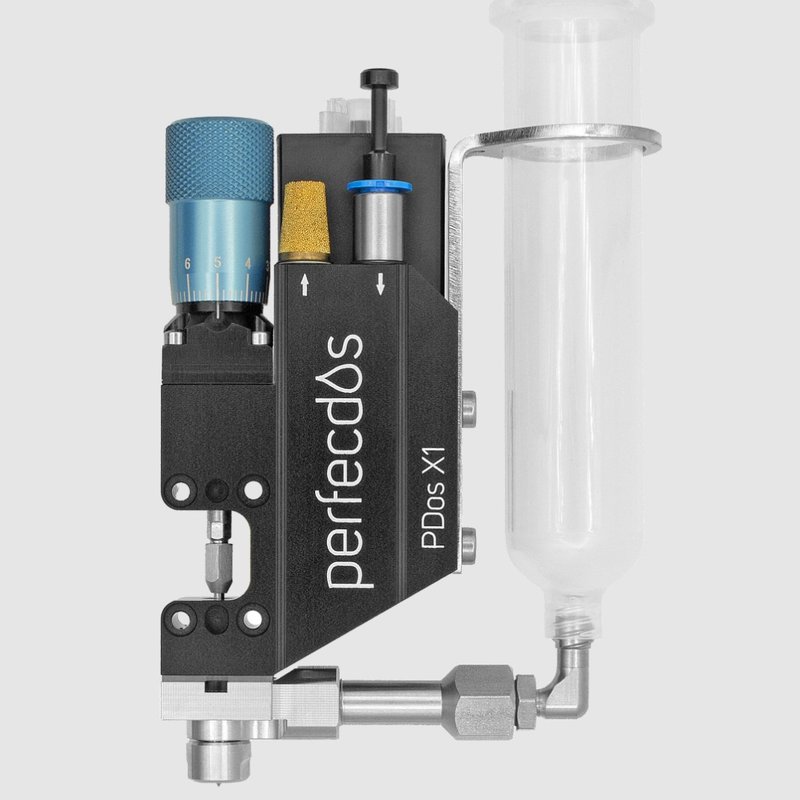
By eliminating physical contact variables, modern fluidic layouts lower material scrap rates by up to 30%. Moving away from manual needle adjustments ensures perfect drop accuracy over hundreds of thousands of identical manufacturing runs. Utilizing formal dispensing process validation allows engineering teams to verify exact material behaviors before finalizing their line architecture.
This flexible fluid configuration precisely controls the deposition dynamics for a diverse array of fast-curing formulations:
- It delivers medical-grade compounds like Loctite 4011 and surface-insensitive formulas like Loctite 401 with impeccable volumetric accuracy.
- Tough, shock-resistant instant adhesives like Loctite 480 or highly flexible options like Loctite 435 jet smoothly without nozzle accumulation.
- Temperature-resistant polymers like Loctite 5011 and quick-setting assembly grades like Loctite 431 stay clean and clear of clogs.
- High-viscosity reactive industrial formulas such as DexCyan 120 or DexCyan 462 stream cleanly without creating satellite drops.
- Specialized factory thread-locking compounds like Loctite 241F flow flawlessly through the valve while keeping crucial system actuators isolated.
Upgrading to these sealed non-contact cells removes human error and protects strict product quality limits across demanding production schedules. Incorporating these parameters into modern automated dispensing systems successfully optimizes overall chemical utilization and keeps cell mechanics clean.
Integrating Automated Dispensing Systems for Precision
Transitioning a fluid valve to a complete assembly cell requires deep system-level coordination to maximize placement accuracy. Mounting high-speed micro dispensing jet valves onto active multi-axis motorized platforms allows manufacturing lines to master fast-moving component paths. This integrated arrangement ensures that rapid droplet delivery matches complex part profiles perfectly without drop distortion.
The above article explains the technical advantages of jetting technology. There is a vast difference in the cost of ownership between piezoelectric and electro-pneumatic actuators. Explore the cost of ownership of each in this article.
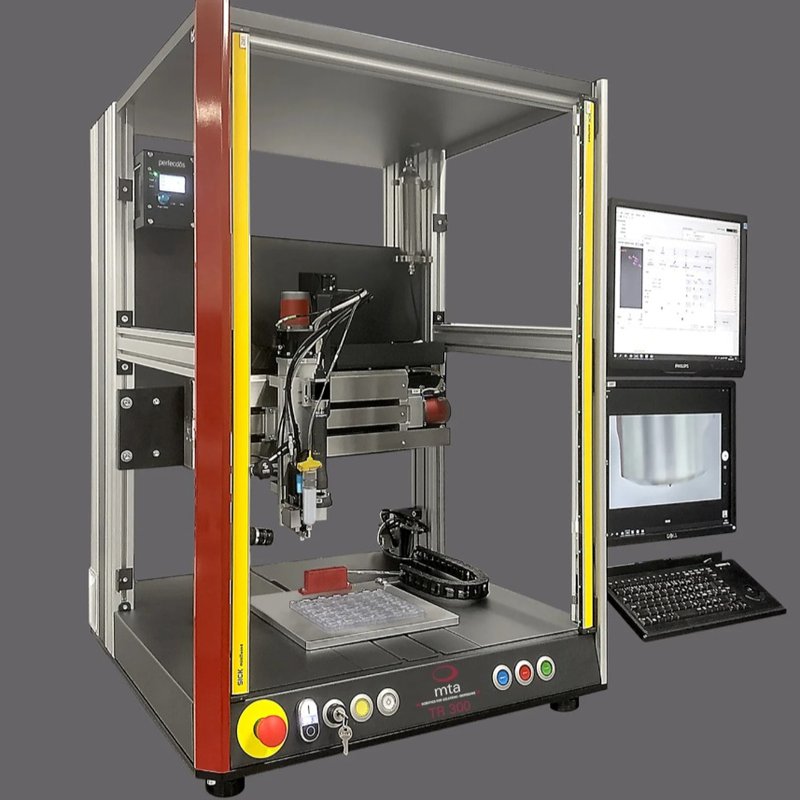
Rigid integration controls are highly advantageous for maintaining fluid profile stability over long production runs:
- Dynamic multi-axis movement tracks allow jetting nozzles to follow winding paths without altering part gap distances.
- Calibrated payload dampening balances the equipment structure to prevent drop deviation during abrupt acceleration changes.
- High-frequency valve triggering synchronizes with motor positioning controllers to execute seamless circular patterns or linear lines.
Weaving these robotic movement mechanics together turns a volatile fluid application into a highly repeatable process asset. Engineers can program drop sequences to build structural seals or precise micro-dots on cramped parts. Relying on customized automated dispensing systems ensures that low-viscosity medium reaches target channels cleanly without risking internal component cross-linking.
Improve Production Yields
Automatically dispensing cyanoacrylate is notoriously difficult, meaning very few machines globally can master this demanding chemical environment. Because the fluid cures instantly on contact with ambient moisture, most standard platforms suffer from immediate mechanical failure. mta robotics offers one of the few specialized technologies engineered to achieve stable, high-speed fluid delivery.
Transitioning from variable manual configurations to turnkey automation takes the guesswork out of handling super glue or crazy glue formulas. These high-reliability platforms completely eliminate common line defects to help factories meet strict quality targets. Utilizing these setups protects sensitive materials from environmental exposure to keep automated dispensing systems running without unexpected downtime.
Ready to eliminate production errors and protect your bottom line? Contact mta robotics today to schedule a dedicated validation test for your assembly chemistry.