
Manufacturers in automotive, medical device, and consumer electronics production face increasing pressure to maintain consistent quality and minimize production risk. Automated soldering plays a critical role in meeting these demands, but successful implementation depends on more than deploying a robotic system. Achieving stable, repeatable results requires careful control of process parameters, equipment behavior, and application-specific conditions.
This article outlines the key areas where process engineers can focus to maintain consistent performance in automated soldering operations.
Start Automated Soldering With Thorough Process Validation
Before a single production run begins, process validation lays the groundwork for everything that follows. Pre-testing on representative sample assemblies allows engineers to identify failure modes early, before they affect live output.
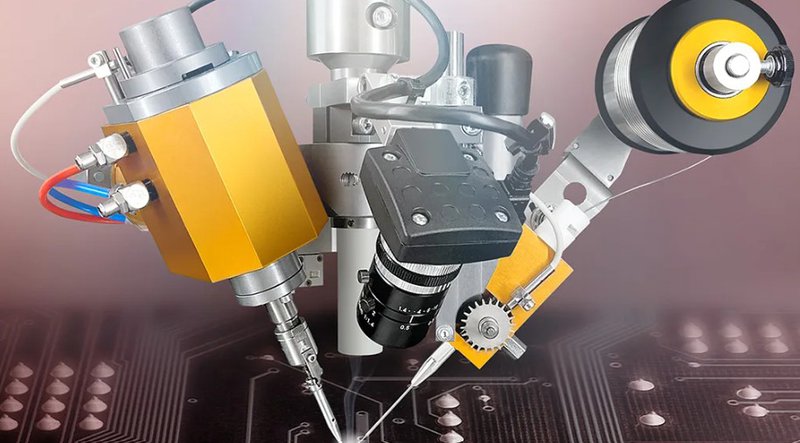
Validation testing should cover the specific component types, board materials, and joint geometries that will appear in production. Engineers should evaluate soldering parameters such as tip temperature, dwell time, wire feed rate, and approach angle during this phase. Adjusting these variables in a controlled lab environment is far less disruptive than troubleshooting them on the production floor. The objective is a documented, proven process that the robotic system can execute reliably at scale.
Process validation also helps engineers select the right soldering technology for each application. Iron, induction, laser, and microflame each suit different joint configurations and thermal requirements. Choosing the appropriate method at the outset reduces the likelihood of chronic quality issues downstream.
Maintain Positional Accuracy and Repeatability
A robotic soldering system's value depends largely on its ability to return to the same position, with the same parameters, on every cycle. Positional accuracy is one of the most critical variables in sustaining consistent output.
Even small deviations in XYZ positioning can produce variable heat transfer, irregular solder deposits, or missed joints altogether. Engineers should understand the sources of positional variation in their specific setup. Thermal expansion of the robot structure, fixture wear, and programming offsets can all introduce drift over time. Carefully accounting for and measuring these ranges allows teams to maintain repeatability and achieve consistent results in mass production.
High-quality motion control hardware is central to this effort. Ball-screw actuators and precise servo drives help robotic platforms hold tight tolerances across thousands of cycles. Repeatability figures in the range of 20 microns or better are achievable with purpose-built soldering platforms and translate directly into uniform joint quality.
Optimize Material Selection and Parameters
The consumable materials used in a robotic soldering process have a direct impact on joint formation and long-term reliability. Solder wire alloy, diameter, and flux content all interact with the programmed process parameters to determine the final outcome.
Flux content, in particular, influences wetting behavior and how solder spreads across the joint. Variations in flux formulation can affect consistency, especially across different component types and thermal conditions. For this reason, material selection should be validated against the specific application, ensuring compatibility with both the soldering process and the assembly requirements.
Beyond the solder wire itself, tight control of temperature and solder deposition is essential. Small, uncontrolled fluctuations in either variable can compound over a production run, leading to inconsistent joints. Choosing materials that match the process design prevents avoidable variation before it reaches the joint.
Implement a Structured Maintenance Schedule
Consistent output requires consistent equipment condition. A structured maintenance program is not optional for operations that depend on robotic soldering to meet quality targets.
Soldering tips experience wear, oxidation, and contamination during normal operation. Degraded tips transfer heat unevenly, which undermines the repeatability that makes automation valuable in the first place. Scheduled tip replacement, combined with regular cleaning cycles, keeps thermal transfer stable across production shifts.
The following maintenance practices form a practical baseline for most robotic soldering operations:
- Inspect and replace soldering tips at defined intervals based on cycle count or visual condition
- Verify axis calibration and positional offsets at scheduled intervals to catch mechanical drift early
- Clean flux residue from the soldering head and surrounding components to prevent buildup that affects heat transfer and tip life
- Review solder wire feed mechanisms for consistent delivery and adjust feed parameters if signs of irregularity appear
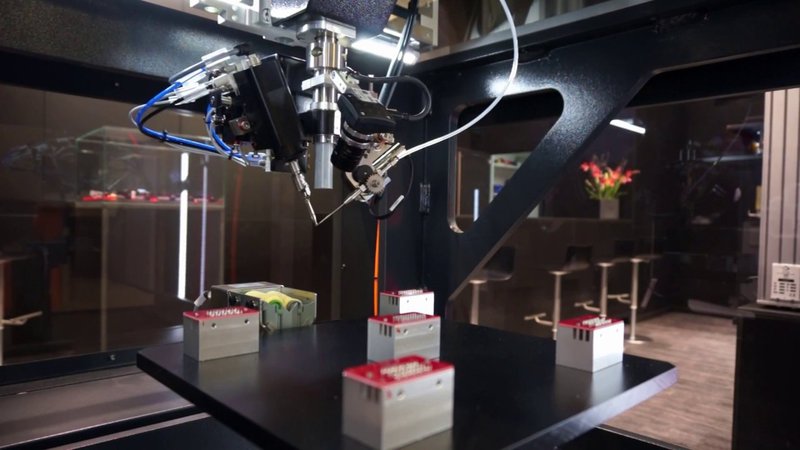
Adhering to a documented maintenance schedule helps prevent unplanned downtime and reduces the risk of process instability during production. By maintaining consistent equipment condition, manufacturers can support stable operation and avoid interruptions that impact throughput and overall production performance.
Integrate Automated Optical Inspection in Automated Soldering
Inspection plays a role in verifying solder joint quality after the soldering process. Automated optical inspection (AOI) systems can be used to evaluate joint conditions against defined acceptance criteria, particularly in high-reliability applications.
However, consistent results in automated soldering are primarily achieved through stable process control rather than post-process inspection. By maintaining precise control over temperature, motion, and solder deposition, manufacturers can reduce the likelihood of defects occurring during production.
Robotic soldering systems that monitor key process parameters in real time can stop operation immediately if conditions fall outside defined limits. This approach prevents the production of non-conforming parts, allowing operators to address issues before production continues.
In this context, inspection serves as a verification step, while process control remains the primary method for maintaining consistent soldering quality.
Partnering With the Right System Provider
Consistent improvement in automated soldering is not only a matter of following best practices. It also depends on working with a system provider that understands the process at a fundamental level.
mta robotics designs and supplies robotic soldering systems with a focus on precision, repeatability, and uptime. The company's process development engineers have validated solder joints across a vast range of applications in automotive, medical, and electronics manufacturing. This depth of experience allows mta robotics to match the correct soldering technology to each specific application, whether that means iron, induction, laser, or microflame.
If your operation is working to close the gap between current performance and the output quality your customers expect, reach out to mta robotics to discuss how their soldering solutions can support your process goals.